
We traveled deep into a dry, barren desert region of Kenya packed into a truck with tribal pastors whose excitement filled the air. The heat required that the windows had to be open, and dust poured in, coating our skin and clothes. The sun beat down on the metal sides of the truck while the sand shifted loose beneath our tires. With no real roads to follow, we slid and swayed along faint tracks that vanished into the wilderness. This was not a place people reached by accident. It was a place you had to choose to go near.
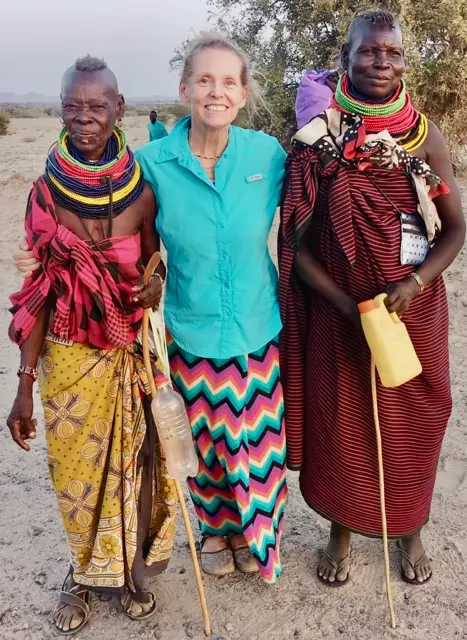
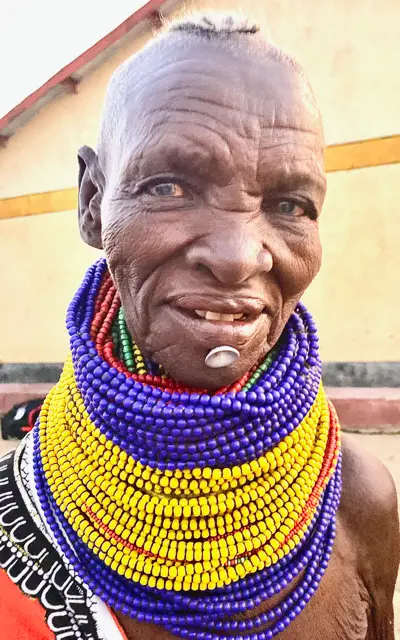
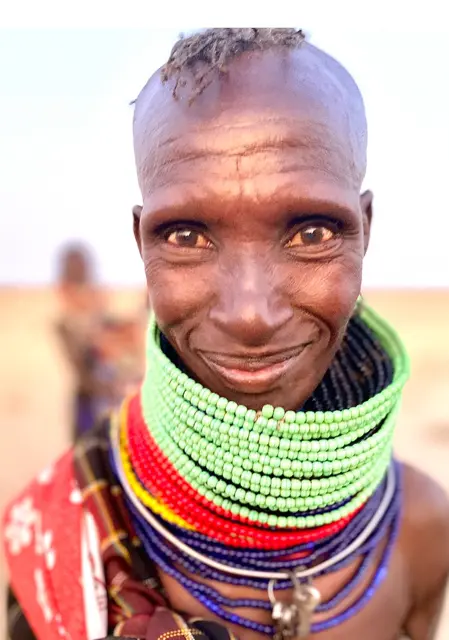
Along the way, we passed women from the Turkana tribe walking beneath the relentless heat, water containers in hand as they made their long journey to find water. Their footsteps pressed into the sand, steady and determined. When they saw me, they wanted a photo—a rare encounter, as probably not many white people come to this area. Their quiet strength stayed with us, a reminder that this desert was not empty—it was filled with people whose daily lives required endurance, and who were deeply seen and loved by God.
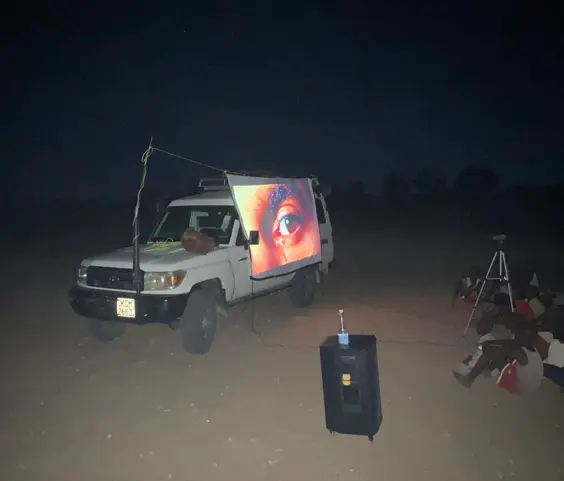
As the sun sank low, we arrived at a small church standing alone in the vastness—simple, weathered, and faithful. We mounted a large screen to the back of our car and set up loudspeakers that would carry sound far into the desert night. There were no homes nearby, no lights, no noise—just open darkness waiting to listen. Word had spread among the tribe: there would be a film.
When night fell, we pressed play.
The face of Jesus appeared on the screen, speaking in their own tribal language. His voice cut through the stillness, echoing across the sand. At first, only darkness answered. Then shapes began to form—figures emerging quietly from the night. Men, women, and children walked toward the light and settled into the sand beneath the stars, watching the story of Jesus unfold in words they could fully understand.
When the film ended, the local pastor stepped forward and gave a simple invitation. The desert remained silent for a moment. Then people began to stand—men, women, children—one after another, offering their lives to Jesus. In that remote place, hearts were stirred and hope took root. The pastor invited them to continue growing in faith by joining the church, and many responded with joy.
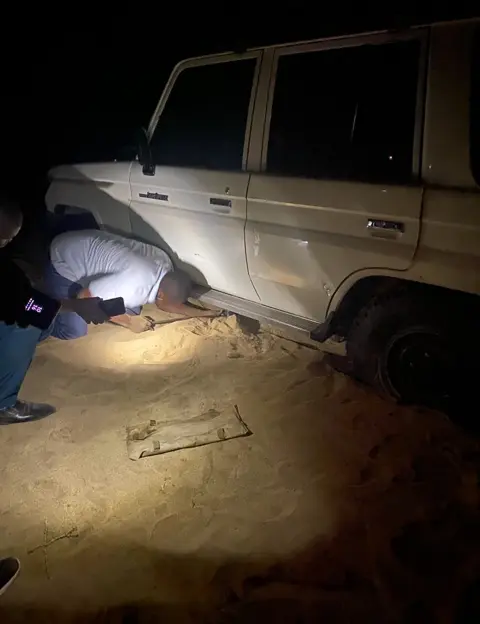
Later that night, after the equipment was packed away and the celebration had quieted, driving home, we became stuck in the deep sand. The tires spun, the engine strained, and the darkness closed in around us. The pastors were worried about bandits. With no road and no nearby help, it could have ended the journey. Instead, God provided. We found branches to press beneath the tires, and slowly the truck moved forward again. What could have stopped us became another reminder that the God who calls us to go near also makes a way.
That night, our car became more than a vehicle—it became a platform for the Gospel. And in a land that looked dry and lifeless, God revealed hearts ready to receive. When we are willing to go near—into dust, heat, and uncertainty—we discover that God is already there, drawing people to Himself.